
The One Who Willingly Went Back
“Faith by itself isn’t enough. Unless it produces good deeds, it is dead and useless.”
James 2:17, New Living Translation
Eloquent speeches and passionate advocacy can motivate crowds and inspire change. But for a person to be a true hero, there must be extraordinary action – often at great personal risk. That is why my spiritual hero is a 12-year-old boy who died nearly 30 years ago.
I could certainly name a wiser, more learned individual – probably someone who authored books or penned essays on the Christian life; I could point to several adults who challenged my theology and encouraged deeper intimacy with God; but, when it comes to sacrificial actions that have motivated me to live out my faith – not just talk about or studying it – Iqbal Masih stands apart.
Other than our shared faith, I have little in common with this Pakistani child, but his life is a stunning example of Christ’s call to sacrificial love and the truth that our spiritual beliefs only matter when realized by practical actions. Decades after his death, Iqbal’s story has indelibly changed how I live as a Christian.
I first learned about Iqbal (pronounced ik-baal) through an article that mentioned that he was the youngest recipient of the Reebok Youth in Action Award, back in 1994 (1). It was one of the first times that a brief biography brought tears to my eyes. Since then, I’ve read fiction and non-fiction books based on his life.
Sold into slavery at the age of four, Iqbal worked for a ‘carpet boss’ under Pakistan’s illegal Peshgi system (2). According to this form of bonded labor, Iqbal was working to pay off his parent’s debt, which amounted to approximately $12.00 (600 Rupees at the time). However, under the Peshgi system’s hidden ‘costs’ of feeding, housing, and teaching the child a trade, the debt would never be repaid and the child would remain in bondage. Despite Peshgi being outlawed, it was a common practice that the Pakistani government often ignored.
Iqbal’s labor was to create beautiful woven carpets in terrible conditions for as long as 14 hours a day. He worked alongside other children in a dark, locked carpet factory. The children were often chained to their looms, deprived of food and water, and punished with beatings. It was not uncommon for them to go days without seeing the sun.
However, when Iqbal was ten years old, everything changed. He found his way out of the carpet factory and into a meeting held by the activist group “Bonded Labour Liberation Front” (BLLF) which helped him escape the carpet factory once and for all (3). Through BLLF, Iqbal managed to obtain a “Letter of Freedom” and helped free the other children in slavery at the same carpet factory.
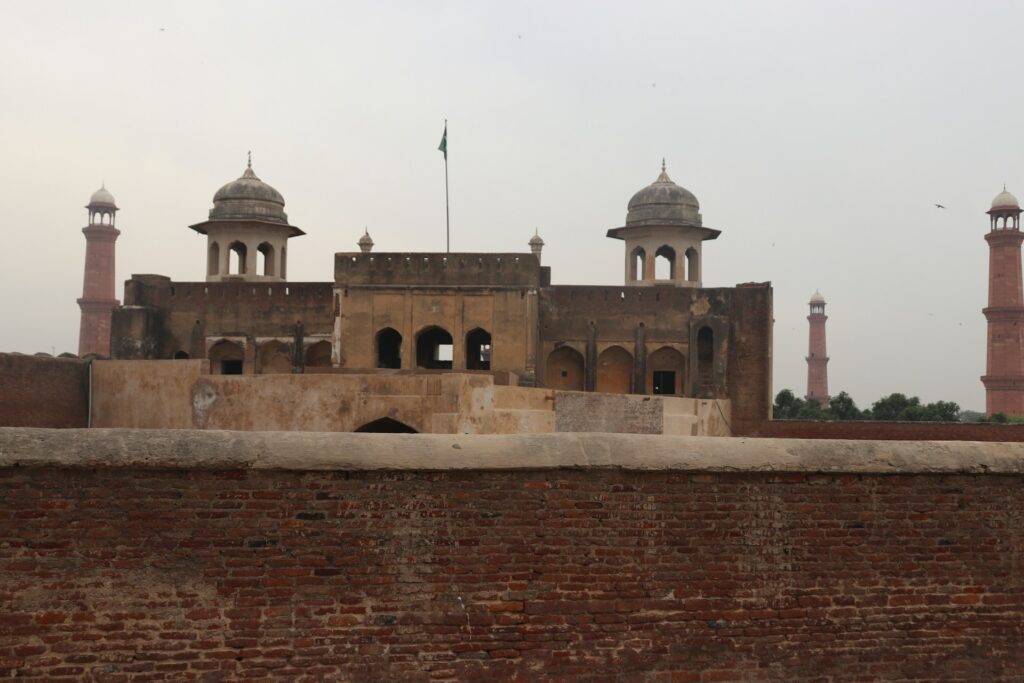
Iqbal began living at the headquarters of the BLLF in Lahore, Pakistan and started learning to read and write. He soared through his studies, completing four years of education in just two, and dreamed of becoming a lawyer. Through BLLF, Iqbal gave speeches locally and internationally to end child labor and encouraged children to break free of bondage. In 1994, he spoke at a labor conference in Sweden and also received the previously-mentioned Reebok Youth in Action Award, which allowed him to travel to the United States where he continued to raise awareness about the oppression of children in Pakistan.
However, back in Lahore, it became increasingly more difficult to obtain enough evidence to convict carpet bosses and end the oppressive cycle of Peshgi. This was due to the influence of the “Carpet Mafia” which had accumulated a great deal of wealth using child labor. Corrupt police officers accepted bribes to ‘lose’ or destroy evidence or even to return escaped children back to slavery. The BLLF struggled to shut down carpet factories that used children in bonded labor.
Iqbal was now free and certainly doing his part to advocate against child slavery, but he wanted to do even more. So, he volunteered to do something outrageous: to go back to the carpet factories, as a slave. From the inside, he could win the confidence of the other children, help them escape, and obtain the necessary evidence to bring down the carpet bosses. Despite all the risks, and the assurance of abuse and hunger, Iqbal willingly became a slave again.
Incredibly, the undercover plan worked! Iqbal was instrumental in freeing the children and getting the factory closed down. So he did it again – and again. It is estimated that Iqbal had at least 30 successful undercover missions. Over the period that Iqbal conducted these ‘rescue operations’, the young Pakistani boy helped to free over 3,000 other children from slavery.
I still tear up every time I read that number: 3,000 other children. All because that young boy chose to surrender his freedom to save others. He could have just given speeches and traveled the world as an advocate for children’s rights. Iqbal could have lived a long, comfortable life and still be doing good, with speeches and a law career.
But it is not his words that make Iqbal Masih my spiritual hero; it is his actions. He surrendered his freedom, safety, education, and even basic human rights so that other children could also be free. This so clearly follows the example of Jesus Christ; who laid aside His rights and His glory in order to set humanity free for all eternity.
It seems ironically fitting, then, that (allegedly) a member of the ‘Carpet Mafia’, shot and killed Iqbal on Easter Sunday, April 16, 1995. He had received death threats previous to this event but was undeterred in his mission to end child slavery. Iqbal was visiting his family for the holiday. He was killed while riding a bicycle with his cousins.
Iqbal did not just talk about ending child slavery – he entered into bondage to set others free. I am not called to go undercover in a carpet factory, and I have not had the opportunity to help a child escape slavery, but my faith, too, must be realized with deeds. Otherwise, what good is it? What does it matter if I have a sound understanding of transubstantiation or can recite all of Psalm 119 unless I practically love those around me? I could spout all the scripture verses I want, but unless I show love in practical ways, I might as well be an alarm clock (6). To summarize the words in the book of James: what good is my faith, without actions to match it?
So, when I feel overwhelmed by the number of children in my front yard, or exasperated that my kids have given all the snacks away to the neighbors – again – I remember Iqbal, and my focus comes back to what matters: what is the Kingdom of God, what things have eternal value, and what honors Christ.
This young Catholic boy’s story always reminds me that my beliefs (no matter how strong), my words (no matter how powerful), and my theology (no matter how correct), only carry value when coupled with action. Iqbal inspires me to do more, not just preach more. He challenges my high ideals with practical implementation. He, post-mortem, calls me to throw open my pantry for the children in my neighborhood and pay attention to the students who need shoes for school.
Iqbal Masih’s story brings me back to the basics of the Christian faith: I have been rescued by Christ through grace, and in response, I am called to love God and love others beyond what is convenient or comfortable. For Iqbal, that meant returning to slavery, for me, it means meeting the needs of the children in my sphere of influence; those in my family and those God has placed around me.
He may have only lived for twelve years, but Iqbal’s life has changed mine. I cannot read of his sacrifice and be content with a feel-good sort of faith. The child who willingly went back into slavery in order to save others inspires me to walk out my faith with practical actions; to love others as Christ has loved me.
Sources:
1. “Human Rights Youth in Action Award” (PDF). Archived from the original (PDF) on 2016-03-10
2. Dr Fraser Murray, Samanthi Theminimulle, Nida Mustaq. “Modern Slavery in Pakistan” (PDF) Published August 2019. https://assets.publishing.service.gov.uk/media/5e56a35a86650c53b6909337/DFID_Modern_Slavery_in_Pakistan_.pdf
3. Wikipedia Page: Bonded Labor Liberation Front. https://en.wikipedia.org/wiki/Bandhua_Mukti_Morcha
4. Kamran Chaudhry, UCA News. “Late Catholic activist wins Pakistan’s highest bravery award”. Published March 25, 2022. https://www.ucanews.com/news/late-catholic-activist-wins-pakistans-highest-bravery-award/96655
5. Francesco D’Adamo, “Iqbal”. Published 2016 by Simon & Schuster.
6. 1 Corinthians 13:1, Holy Bible, NIV
7. James 2:17, Holy Bible, NIV
*IQBAL by D’Adamo (Simon & Schuster) is required reading for all my teenagers. I highly (HIGHLY) recommend it.
First published by Today’s Christian Living, placed 3rd in the annual writing contest on the theme “My Spiritual Hero”